
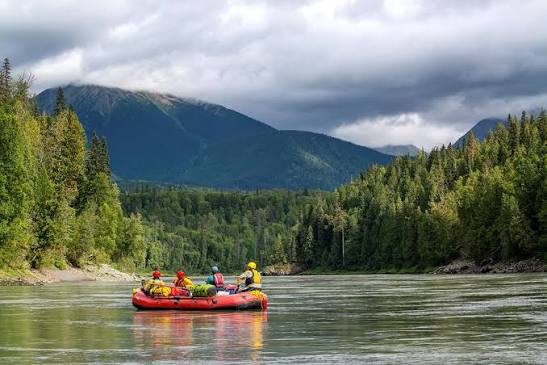
Mike Property - Babine Region, British Columbia
Document Dossier Summary
EXECUTIVE CONTENT OVERVIEW
Select any section below to jump directly to detailed findings:
Property Overview
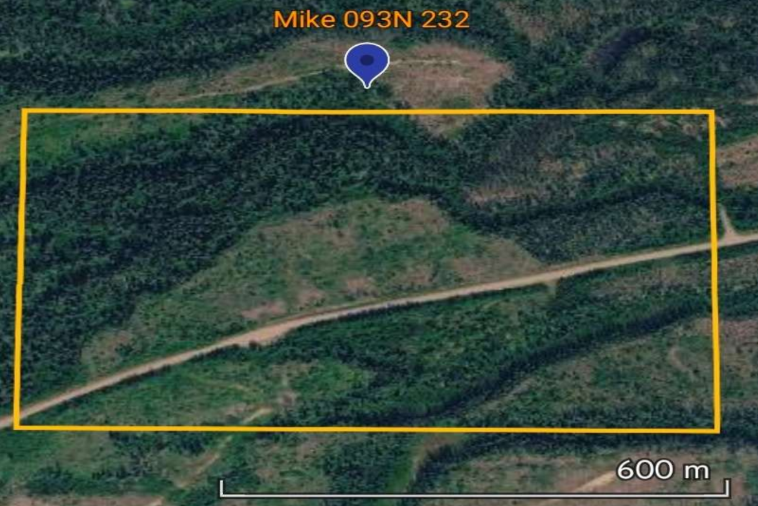
The Mike Property is an early-stage copper exploration project situated in the Babine region of north-central British Columbia, within the Omineca Mining Division. Covering approximately 36.89 hectares, the property contains the documented Mike mineral occurrence (MINFILE 093N 232). The showing is associated with a monzonite-to-diorite brecciated intrusive body containing chalcopyrite and bornite mineralization. The occurrence is classified as an L03 Alkalic Porphyry Cu-Au deposit type. Its geological setting, characterized by intrusive brecciation, copper sulphides, and multiple phases of the Hogem batholith, provides a geological basis for additional porphyry-style exploration.
Location and Regional Setting
- Located in the Babine region of north-central British Columbia, within the Omineca Mining Division.
- The occurrence is described as being approximately 22.7 kilometres along the T-Road, where a rock pit on the north side of the road exposes the mineralized intrusive body.
- Situated within the Intermontane tectonic belt, near the geological boundary between rocks assigned to the Quesnel and Cache Creek terranes.
- The known showing is associated with a pre-existing rock pit along an established resource-road corridor.
- The location may offer practical access advantages for an early-stage exploration project compared with a remote backcountry occurrence.
Geological Setting
The region surrounding the Mike occurrence is underlain by two phases of the Hogem batholith, which intruded Upper Triassic sedimentary rocks of the Inzana Lake Formation of the Takla Group. One intrusive phase consists of Late Triassic to Early Jurassic gabbroic-to-dioritic rocks, while a second phase consists of Early Jurassic quartz monzonitic-to-monzogranitic intrusive rocks. The known showing occurs where a rock pit exposes a monzonite-to-diorite brecciated intrusive body. Mineralization occurs within fragments of diorite breccia contained within the monzonitic body. This relationship between different intrusive phases, brecciation, and copper sulphides provides the principal geological target for continued exploration.
Deposit Type and Exploration Model
- Official deposit classification stated in the supplied property description: L03 – Alkalic Porphyry Cu-Au.
- The geological association at Mike comprises monzonite, diorite, intrusive brecciation, chalcopyrite, and bornite.
- Porphyry-style mineralization may occur as disseminations, fractures, veinlets, and breccia-hosted sulphides.
- The main exploration objective is to determine whether the exposed mineralized breccia represents a small isolated occurrence or the surface expression of a larger mineralized intrusive-hydrothermal system.
- Although copper is the principal documented commodity, future analytical work should include gold and a broader porphyry pathfinder suite in line with the assigned Cu-Au deposit model.
Known Mineralization
The Mike showing is exposed within a rock pit on the north side of the T-Road. The pit exposes a monzonite-to-diorite brecciated intrusive body, with copper mineralization consisting principally of chalcopyrite and bornite. The sulphides occur within diorite breccia fragments enclosed by the monzonite body. Several additional small subcrop exposures are reportedly scattered across the bottom of the rock pit. The supplied MINFILE information does not provide assay values for the original Mike discovery. Consequently, the documented mineralization establishes a geological exploration target but does not, by itself, establish economic grade or tonnage.
Discovery and Historical Exploration
- The Mike showing was discovered in 1999 by Lorne and Chris Warren while prospecting in the area.
- The known showing appears to have received comparatively limited direct systematic exploration since its discovery.
- Regional exploration on the nearby Majazz property provides additional geological and geochemical context.
- In 2015, Pacific Empire Minerals Corporation conducted exploration on the Majazz property.
- The 2015 program collected 351 soil samples at approximately 100-metre intervals along lines spaced approximately 200 metres apart.
- Soil samples were collected from the B horizon using a soil auger.
- One rock sample was collected from an outcrop exhibiting saussurite alteration and chalcopyrite mineralization.
- The regional work documents additional hydrothermal alteration and copper mineralization in the surrounding exploration area, but it should not be interpreted as direct assay evidence for the Mike showing.
Regional Soil Geochemistry
Follow-up exploration during 2016 included a soil-geochemical program consisting of approximately 35 soil samples followed by XRF analysis. The supplied property description reports that the program confirmed copper and molybdenum in soils in the southwestern portion of the nearby Majazz property. The anomalous zone was reported to measure approximately 800 metres × 400 metres. This regional Cu-Mo geochemical anomaly provides exploration context for the Mike Property, but it is located on the nearby Majazz property and must not be represented as a confirmed geochemical anomaly within the 36.89-hectare Mike tenure.
Breccia-Hosted Copper Target
The most compelling geological feature at Mike is the association between copper mineralization and intrusive brecciation. Breccias can provide important fluid pathways within porphyry systems, particularly where multiple intrusive phases interact with faults, fractures, and hydrothermal fluids. At Mike, chalcopyrite and bornite occur within diorite breccia fragments enclosed by a monzonitic intrusive body. Further mapping, sampling, and geophysical work would be required to establish the extent, continuity, and significance of the mineralized breccia.
Porphyry Exploration Potential
- Hogem batholith intrusive rocks.
- Multiple intrusive phases.
- Monzonitic and dioritic rocks.
- Mineralized intrusive brecciation.
- Documented chalcopyrite and bornite.
- Multiple small subcrop exposures within the historic rock pit.
- Established T-Road access to the known occurrence.
- Nearby saussurite alteration and chalcopyrite mineralization.
- Historical regional soil geochemistry on the Majazz property.
- Reported regional copper-molybdenum soil anomalism, including an approximately 800 × 400 metre zone on Majazz.
- Comparatively limited documented modern systematic exploration directly on the Mike showing.
- Potential to apply modern porphyry exploration methods to test the extent of the known mineralized intrusive target.
Exploration Opportunity
The 36.89-hectare Mike Property provides a compact exploration opportunity centered on a documented alkalic porphyry Cu-Au occurrence. Its attraction is the ability to focus exploration on a known chalcopyrite-bornite-bearing intrusive breccia within the Hogem batholith geological environment. Initial work could include compilation of historical information, geological mapping, systematic rock and soil sampling, multi-element geochemical analysis, and appropriate geophysical surveys. Follow-up drilling should be designed only after the target's geometry, alteration, mineralization, and surface geochemical or geophysical responses have been assessed. The supplied information does not establish a mineral resource, reserve, economic grade, or defined drill target.
Acquisition and Option Terms
Aurora Gold and Gravels Inc. is seeking a company capable of advancing the Mike Property through systematic exploration and eventual drill testing. The vendors are open to an outright cash and/or share acquisition, a staged option-to-purchase agreement, or another mutually acceptable transaction structure, provided that the vendors retain a Net Smelter Return (NSR) interest. An outright purchase could involve a negotiated cash and/or share payment for 100% acquisition, subject to a retained NSR royalty. Under an option agreement, a company may earn up to 100% ownership through staged cash payments, company shares, and exploration expenditures. A potential 2% NSR has been discussed, with the final royalty and any buyback provisions subject to negotiation. All purchase consideration, exploration commitments, payment schedules, and other commercial terms remain negotiable and subject to execution of a definitive agreement.
Vendor Contact
- Contact: Micheal Scott Langille.
- Company: Aurora Gold and Gravels Inc.
- Location: Bella Coola, British Columbia, Canada.
- Email and telephone: Not provided in the supplied property description.
- Transaction interest: Outright acquisition, staged option agreement, or another mutually acceptable arrangement.
Supporting Documentation
- BC MINFILE occurrence 093N 232 is identified as the documented Mike mineral occurrence.
- The supplied property description references regional exploration on the nearby Majazz property, including 2015 soil and rock sampling and a 2016 soil-geochemical program.
- Direct URLs to the official MINFILE record, assessment reports, geochemical maps, original assay certificates, and current tenure records were not supplied.
- Obtain the original technical records and verify current tenure boundaries, ownership, and access before relying on the information for an acquisition decision.
Quick Facts
- PropertyMike Property
- Property Area36.89 hectares
- LocationBabine region, north-central British Columbia
- Mining DivisionOmineca
- MINFILE Number093N 232
- CommoditiesCopper (Cu); gold is a secondary exploration target
- Deposit TypeL03 – Alkalic Porphyry Cu-Au
- Host Intrusive RocksMonzonite and diorite breccia
- Geological SettingHogem batholith; Intermontane tectonic belt
- Principal Copper MineralsChalcopyrite and bornite
- Discovery Year1999
- DiscoveryLorne and Chris Warren
- AccessT-Road resource-road corridor
- Nearby Regional TargetMajazz property Cu-Mo soil anomaly, approximately 800 × 400 m
- Owner / VendorAurora Gold and Gravels Inc. (proposal contact)
- ContactMicheal Scott Langille
- TransactionOutright acquisition or staged option; terms negotiable
- Proposed NSRPotential 2% NSR, subject to negotiation